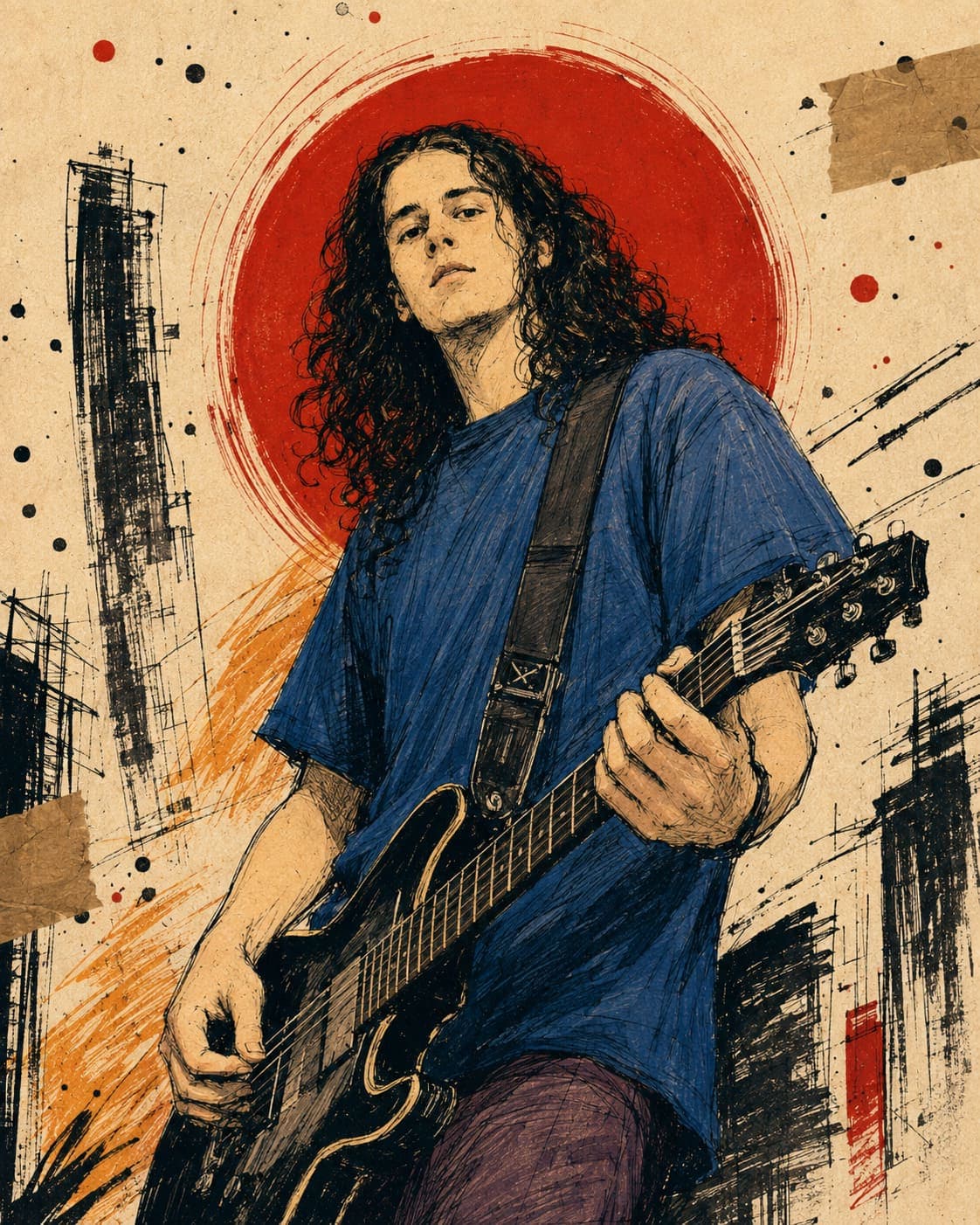
Exequiel Sosa
Guitar · Vocals
Voice, guitars and a suspicious amount of long hair.
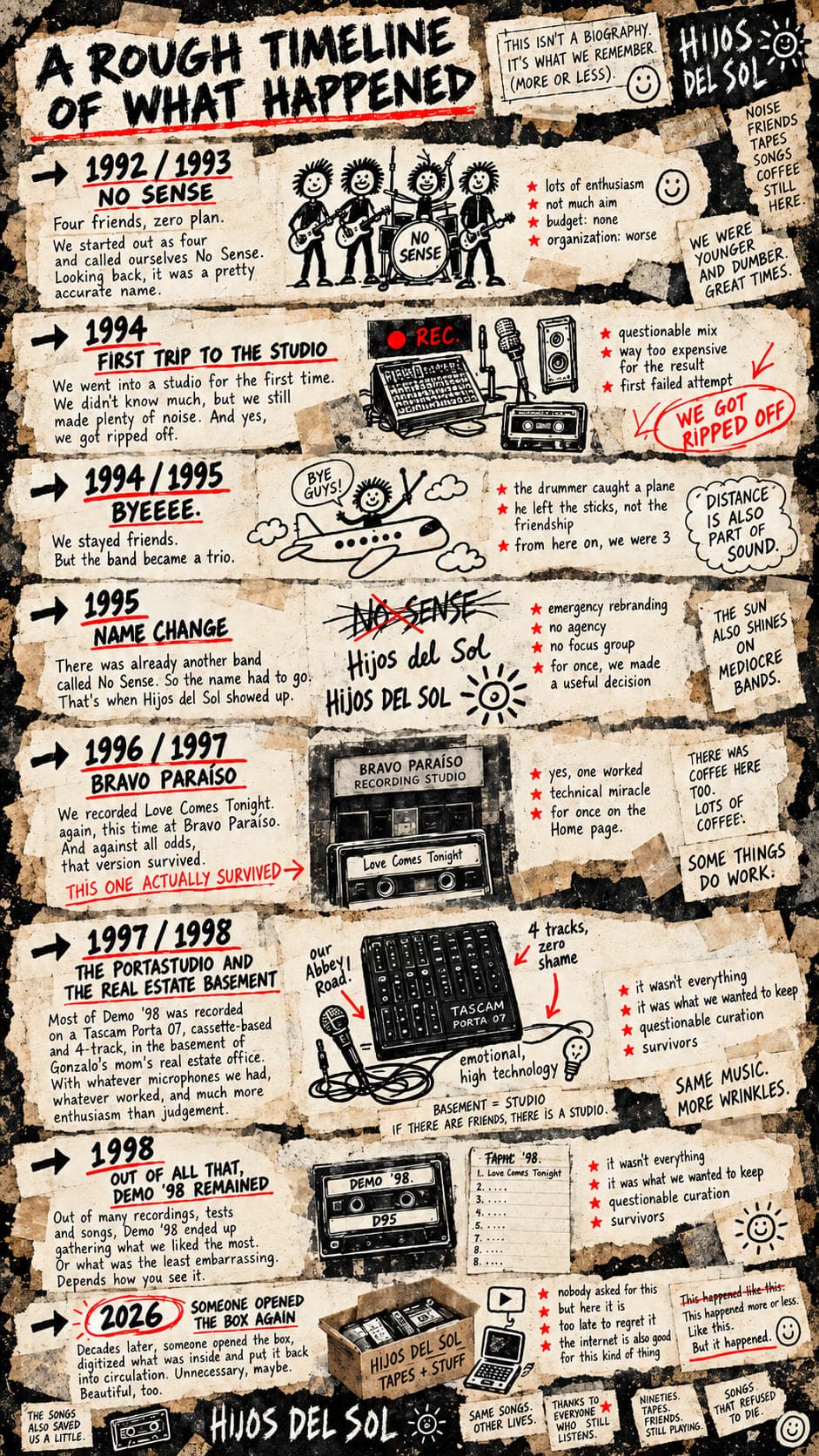
Hijos del Sol was born in Buenos Aires between 1992 and 1993, when four friends started playing together with no real plan and considerably more enthusiasm than budget.
At first the band was called Sin Sentido. There were four of us, until one of us moved abroad — still a friend to this day — and we were down to three. Not long after, we found out another band already had that name, so it had to change. That's when Hijos del Sol appeared, a name that would end up surviving rehearsal rooms, drummers, amplifiers and more than a few questionable decisions.
Over the following years came the first studio sessions, demos, live shows, lineup changes and a fairly absurd amount of songs recorded however they could, whenever they could, wherever they could. Some ended up in studios. Many others were born in a basement, among tapes, cables, borrowed microphones and a four-track recorder that turned out to matter a lot more than we ever imagined.
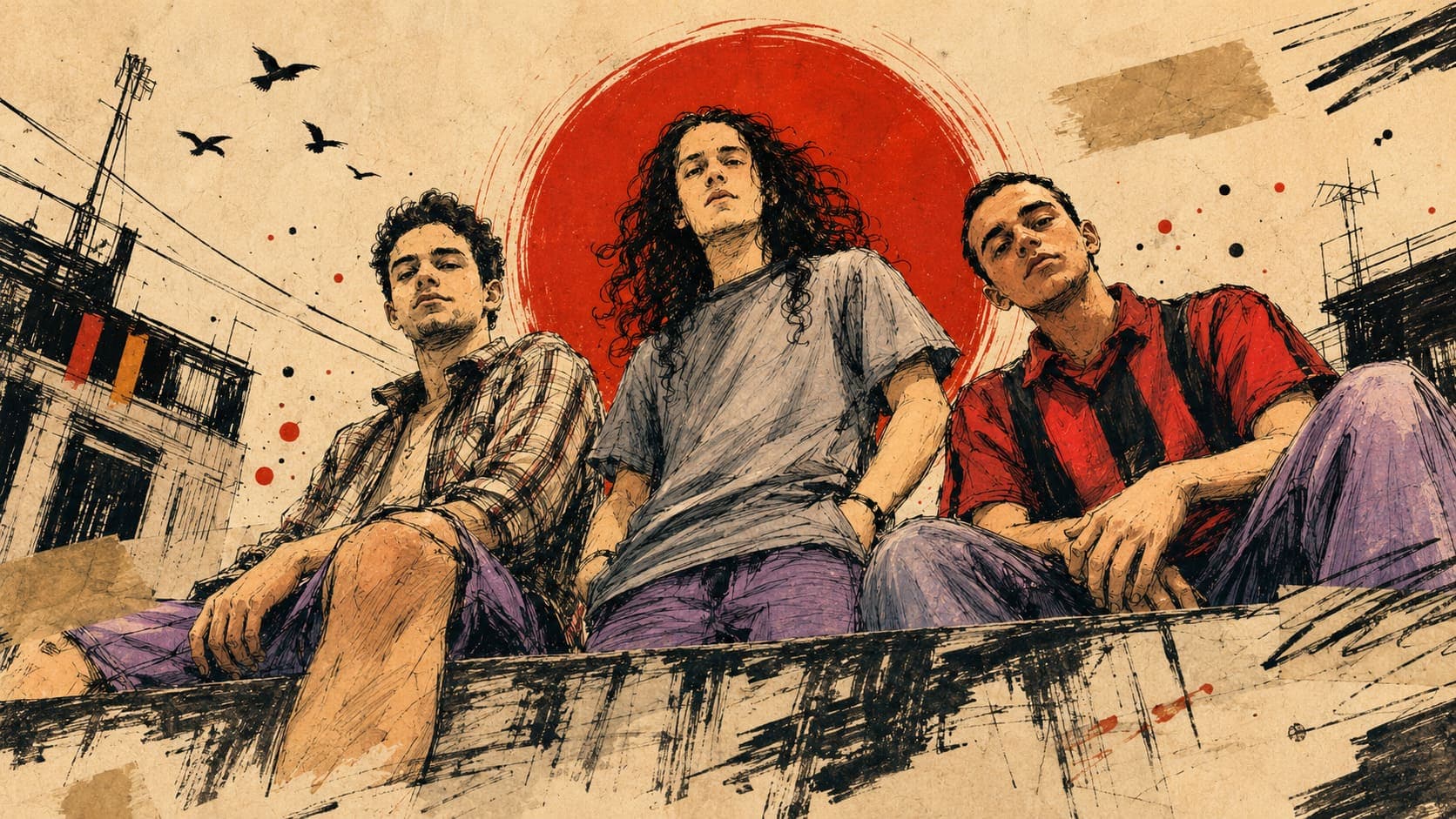
Three friends, too many songs and nowhere near enough rehearsal-room money.
Guitar · Vocals
Voice, guitars and a suspicious amount of long hair.
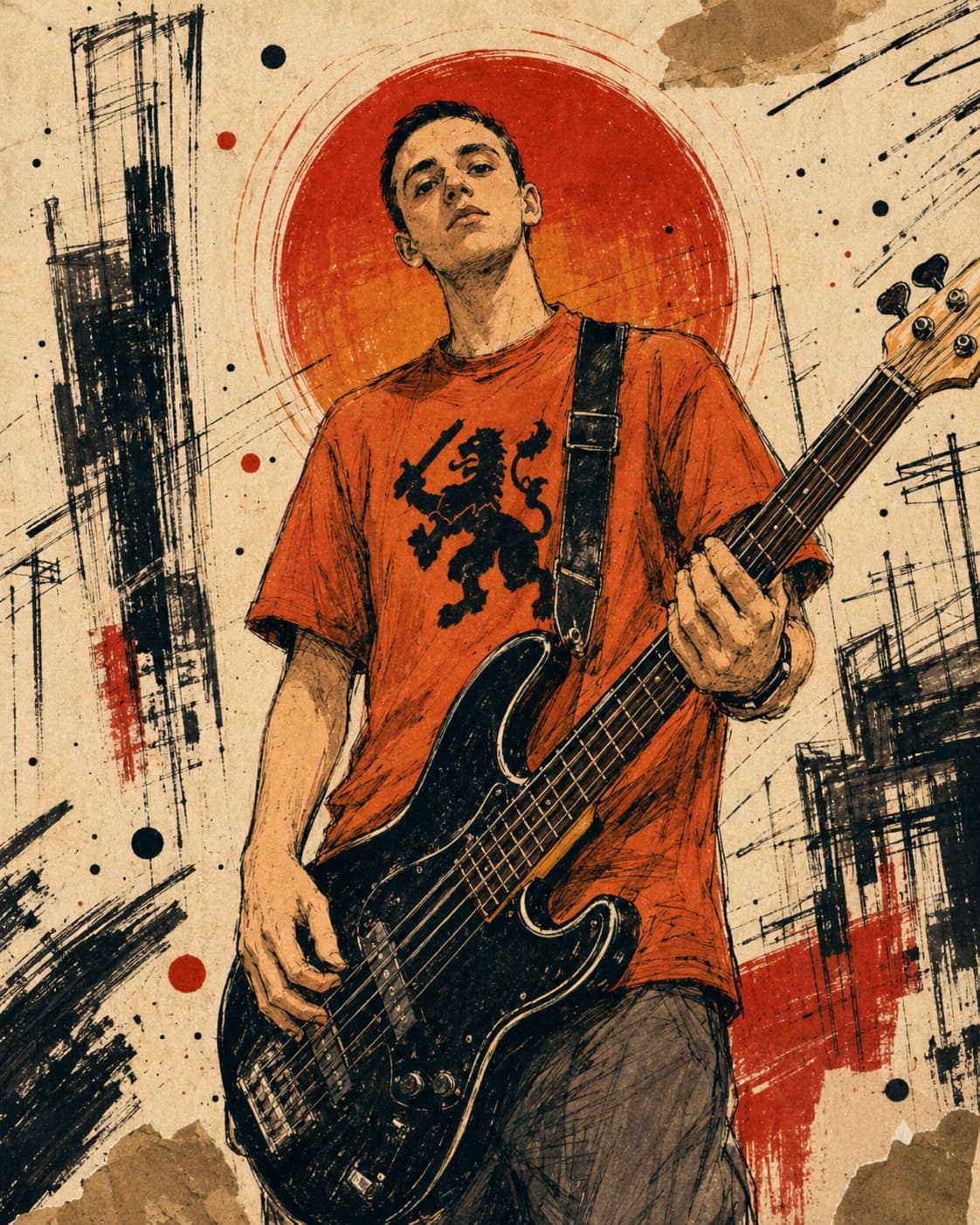
Bass · Backing vocals
Holding everything together from the low end.
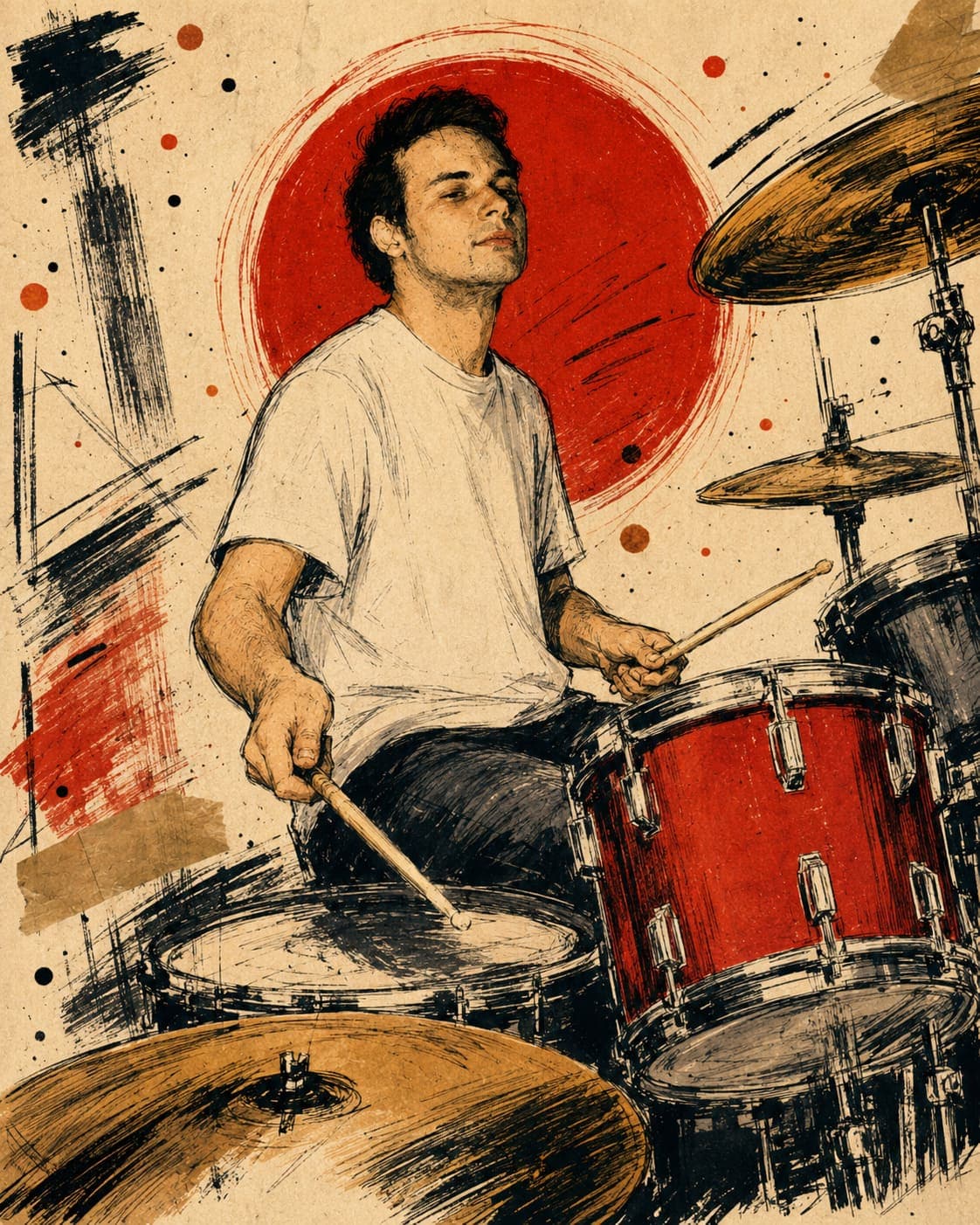
Guitar · Backing vocals · Drums
Started with six strings. Somehow ended up behind the drums.
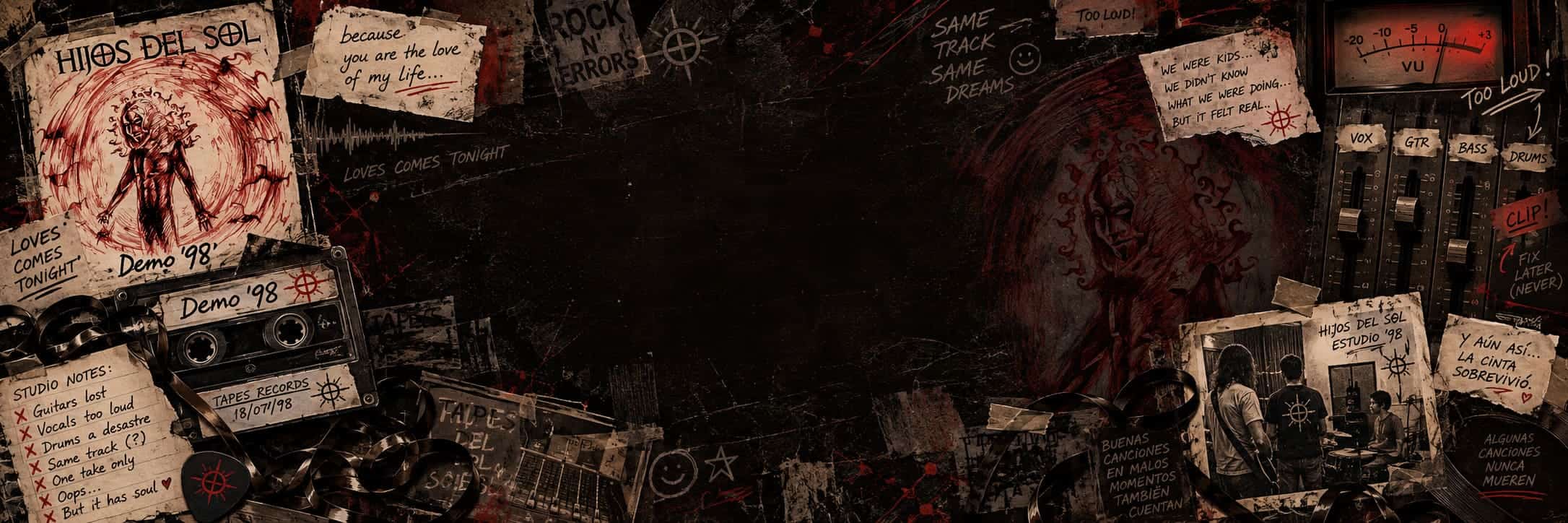
Before Demo ’98, there was a first attempt. It went badly.
We recorded an early studio version of “Love Comes Tonight” back when we didn’t really know how any of this worked yet.
The guitars are almost inaudible, the vocals came out absurdly loud, and the lead vocal and backing vocals were recorded together, on the same track, in a single take.
The result was, to put it kindly, pretty disastrous.
The tape survived for decades, turned up again, and we digitized it. We’re putting it on YouTube now not because it sounds good, but because it’s part of the story too.
Some recordings get remastered. Others get kept as evidence.
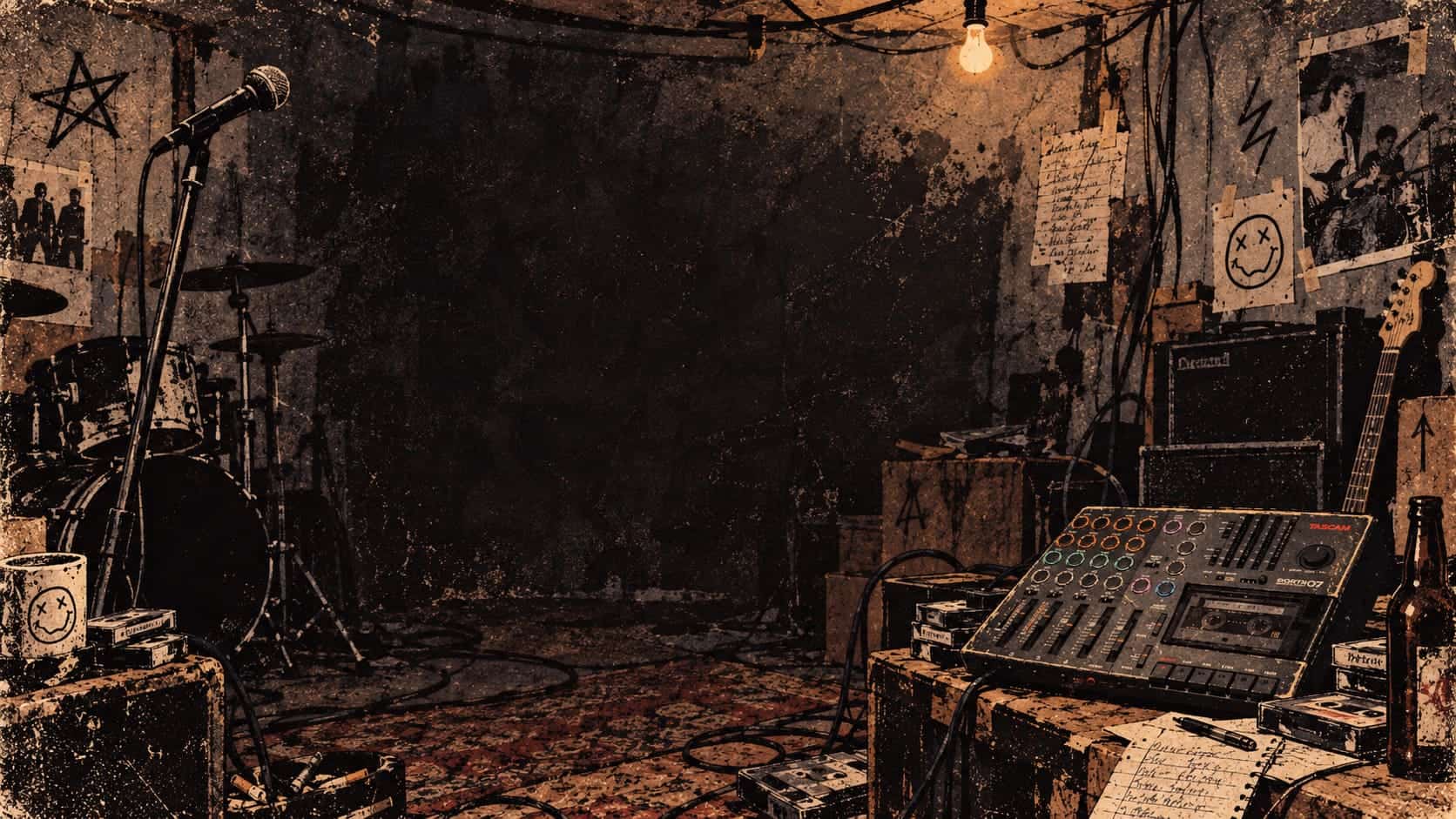
We didn’t have a studio.
We had a basement.
In the basement of Gonzalo’s mom’s real estate office, we’d set up instruments, cables, whatever microphones we could find, and our one real piece of technology:
A Tascam Porta 07, a four-channel cassette four-track.
With that we recorded a fairly absurd number of songs, tests, versions, ideas and things that were probably better left unheard again.
But some survived.
And years later, many of them ended up becoming Demo ’98.
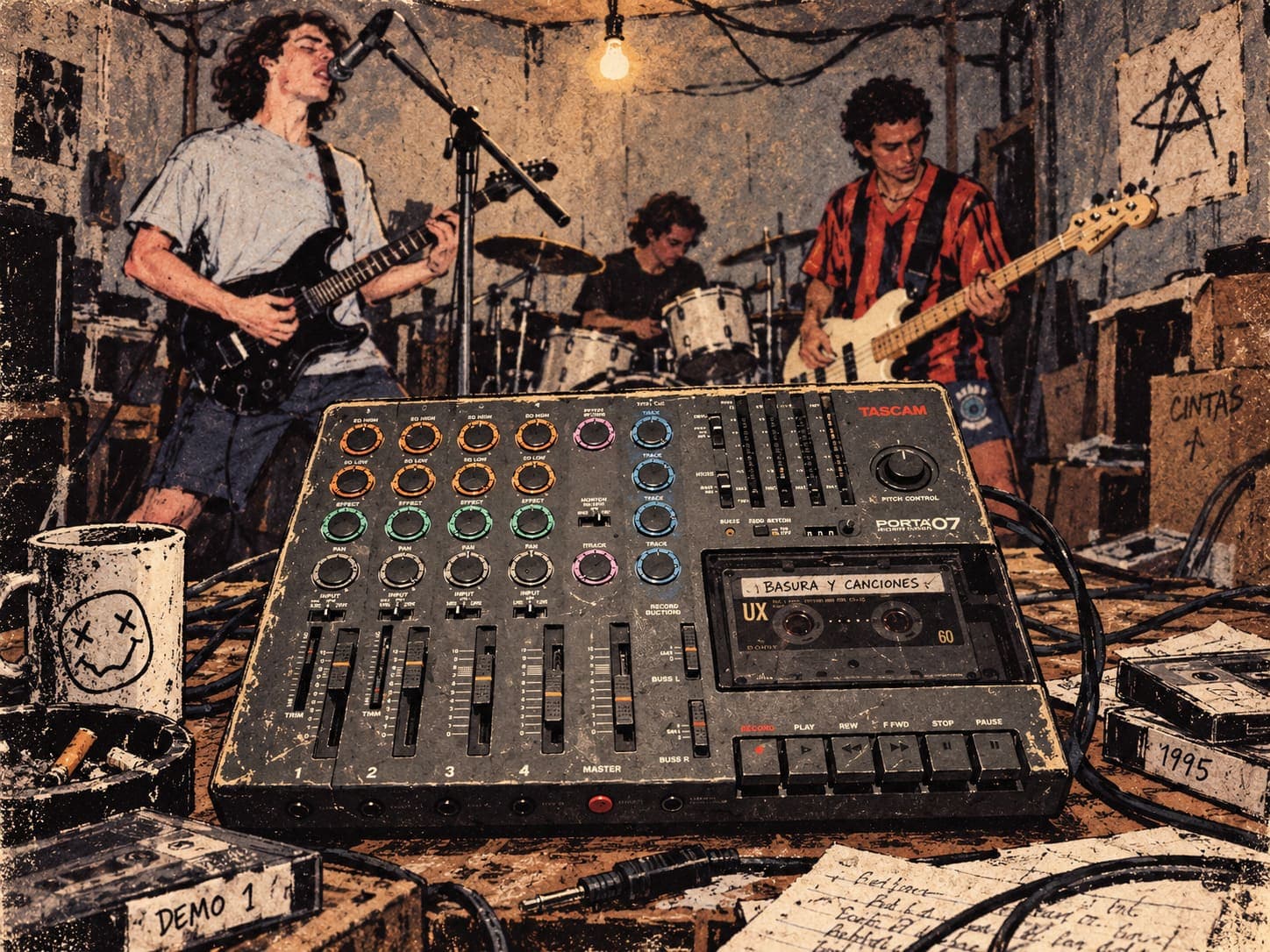
4 channels. One basement. Too many songs.
Between 1996 and 1997 we recorded “Love Comes Tonight” again, this time at Bravo Paraíso.
That recording actually survived.
And it’s the same version you can still hear on the Home page today.
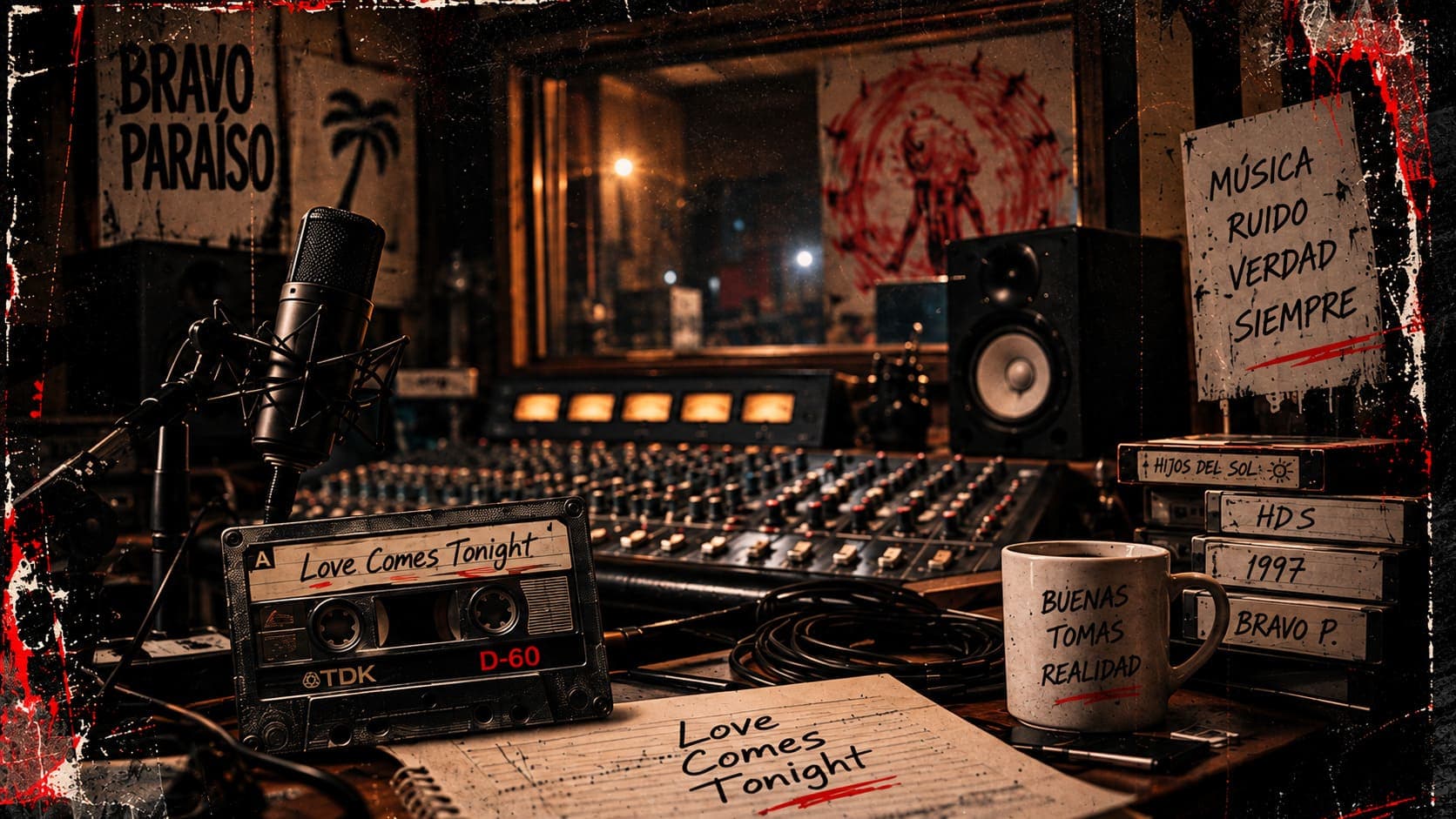
We recorded a lot more than what ended up here. Some of it stayed on tape, some got lost, and some ended up on Demo ’98.
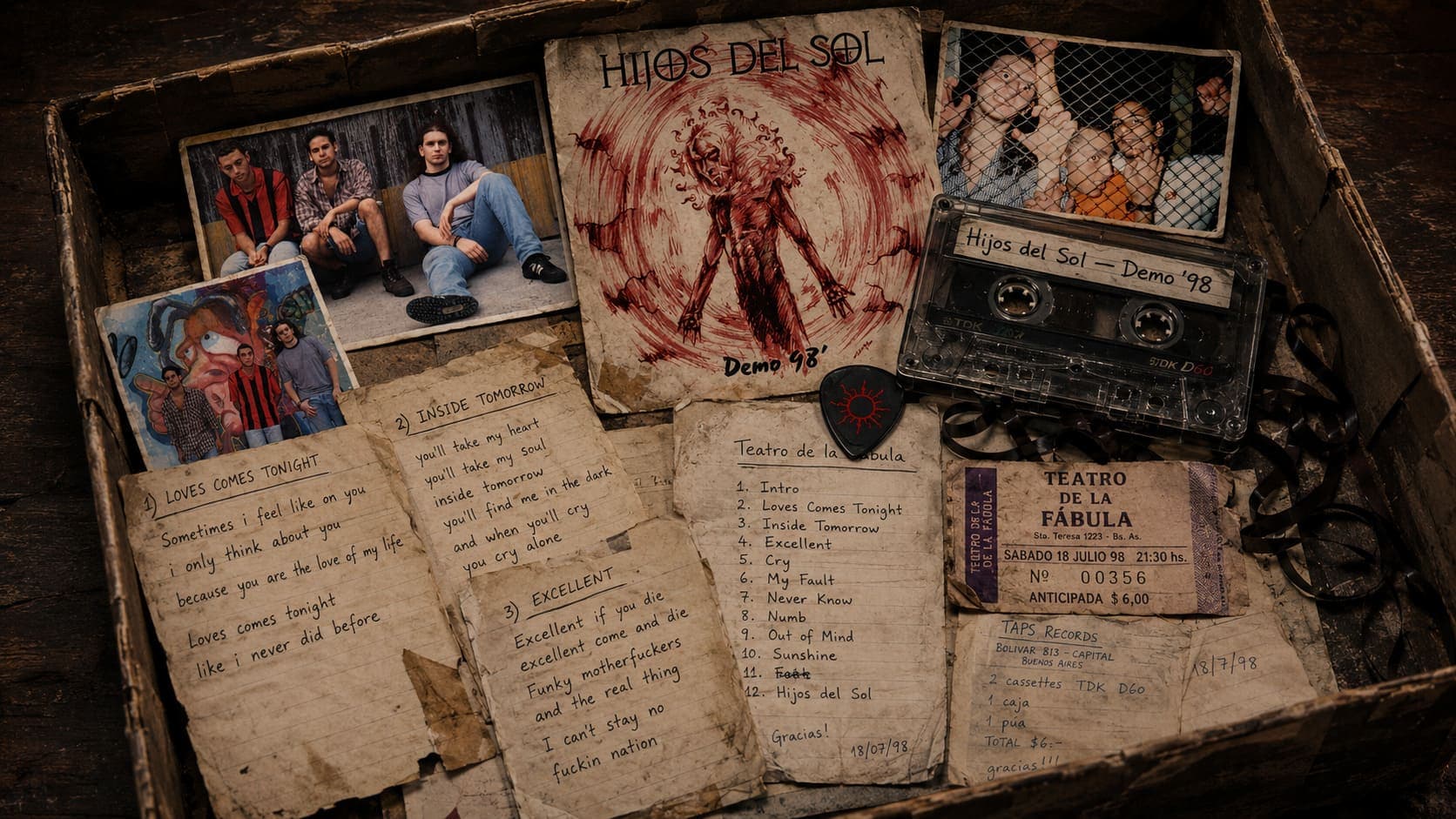
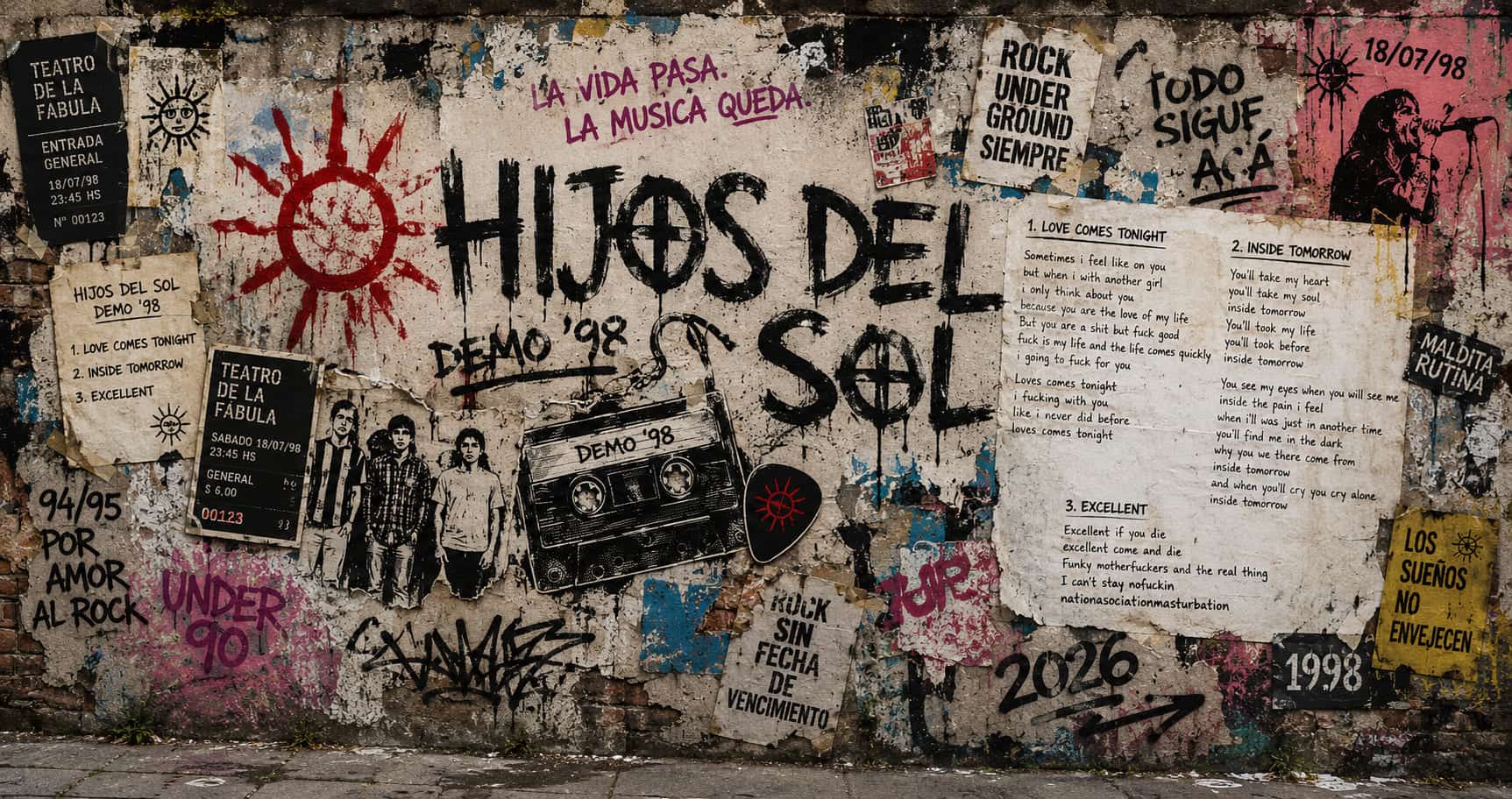
In 1998 we gathered thirteen songs and put together Demo ’98. It wasn’t everything we’d recorded: it was a selection of what we liked best and what had come out best.
Except for Love Comes Tonight, recorded at Bravo Paraíso and later included on a Taps Records compilation, most of the rest came from those recordings made with the Porta 07 in the basement.
Thirteen songs kept as a small time capsule.
Then life happened.